

On this page
Short answer
What matters most
EICR codes communicate the significance of observations; remedial work should respond to the exact observation and evidence rather than a generic package attached to every report. This guide explains what the decision depends on without treating age, appearance or a headline price as property evidence. Record the condition, access, intended result and available documents, then ask which points still require inspection, design or testing before accepting a recommendation.
How EICR classifications communicate risk
C1 indicates danger requiring immediate action. C2 identifies a potentially dangerous condition needing urgent remedy. They form a useful evidence boundary for this decision. Begin with reviewing available certificates and previous reports, then mark which conclusion is observed, measured, documented or still provisional. That sequence makes the later quotation easier to challenge and compare if site information changes.
The recommendation also needs to work after installation day. Test the property against this principle: limitations must be recorded rather than hidden. Then account for tenant or occupier access and decide how issuing the report and explaining priorities will be witnessed or recorded. Handover information such as separate certification for later remedial work where applicable should match the final arrangement rather than the original estimate.
- C1 indicates danger requiring immediate action.
- C2 identifies a potentially dangerous condition needing urgent remedy.
Evidence for how eicr classifications communicate risk
C1 indicates danger requiring immediate action. C2 identifies a potentially dangerous condition needing urgent remedy. Assign the unanswered point to a person and stage so it cannot disappear between survey, quotation and installation.
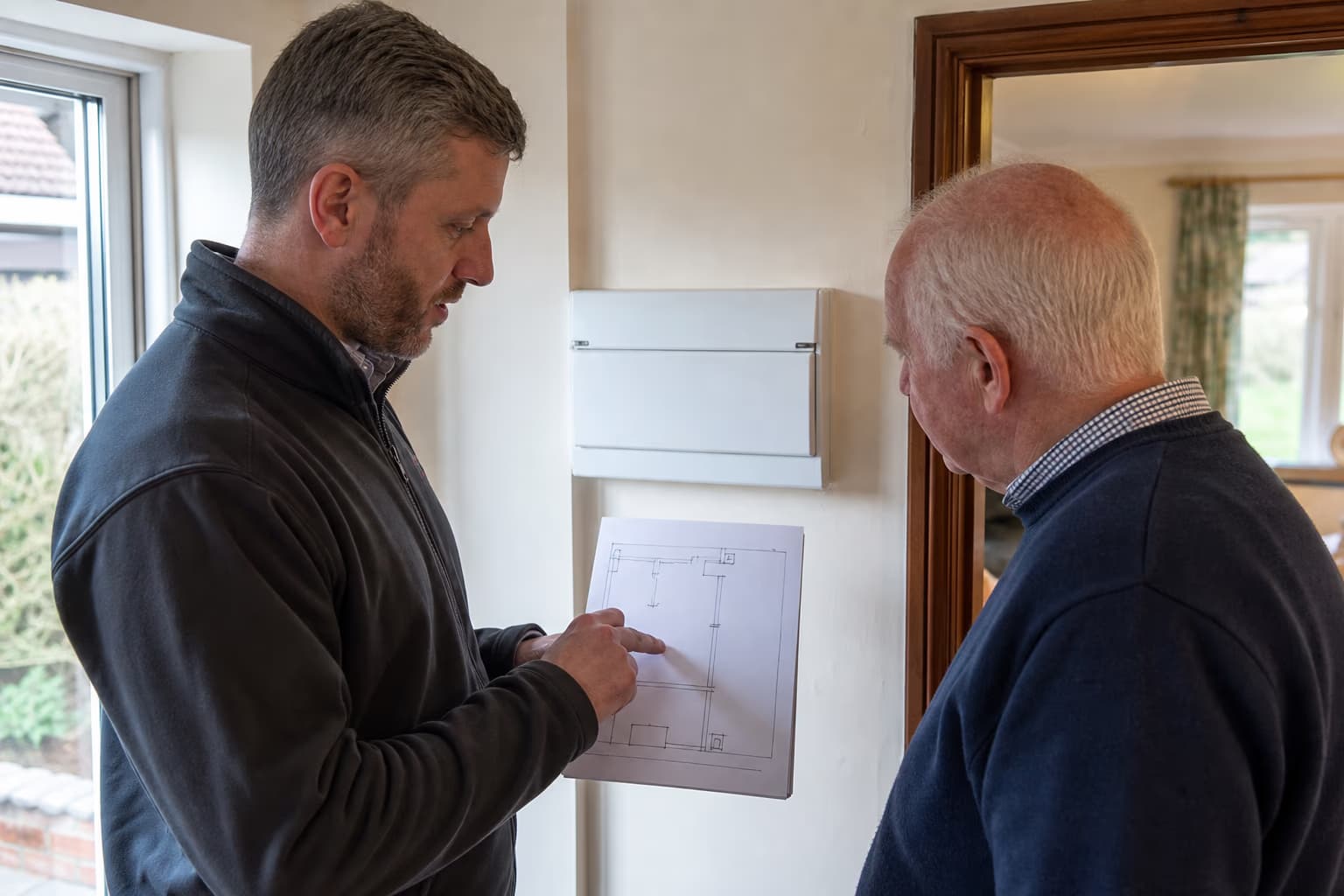
Read observations with extent and limitations
FI means further investigation is required without delay. C3 is an improvement recommendation rather than an unsatisfactory code alone. For this part of the brief, distinguish the customer's known requirement from the installation evidence. Confirming access to the consumer unit, circuits and representative accessories provides one route to that evidence. If access prevents confirmation, record the missing fact and the consequence instead of silently treating it as satisfactory.
This section changes the work only when the evidence justifies it. Start with the technical principle: a report outcome is never guaranteed before inspection. Then assess the practical effect of sensitive equipment and planned isolation; neither should be inferred from the headline query. The sequence includes visual inspection of accessible installation components, and the completed record may include schedule of inspections and test results according to the work delivered.
- FI means further investigation is required without delay.
- C3 is an improvement recommendation rather than an unsatisfactory code alone.
Evidence for read observations with extent and limitations
FI means further investigation is required without delay. C3 is an improvement recommendation rather than an unsatisfactory code alone. Link the finding to its practical effect on route, equipment, programme, cost or handover instead of recording it without consequence.
Turn evidence into a remedial scope
The observation wording identifies the affected part and evidence. Further checks may be needed before a repair can be priced. These are connected questions rather than separate checklist items. Use agreeing the purpose, extent and limitations of the inspection to establish the starting condition and note the source of each answer. A photograph or previous document can guide the visit, but it should not be presented as a current electrical test result.
Turn the answer into an auditable scope by recording the technical principle clearly: classification codes require competent judgement and context. Then address the practical factor of distribution-board identification. State when issuing the report and explaining priorities occurs, what must be available at that point and who approves a variation. Where applicable, recorded extent and limitations then closes the chain from initial question to tested result.
- The observation wording identifies the affected part and evidence.
- Further checks may be needed before a repair can be priced.
Evidence for turn evidence into a remedial scope
The observation wording identifies the affected part and evidence. Further checks may be needed before a repair can be priced. If later site information differs, update the written scope and the reason rather than carrying an obsolete assumption into the work.
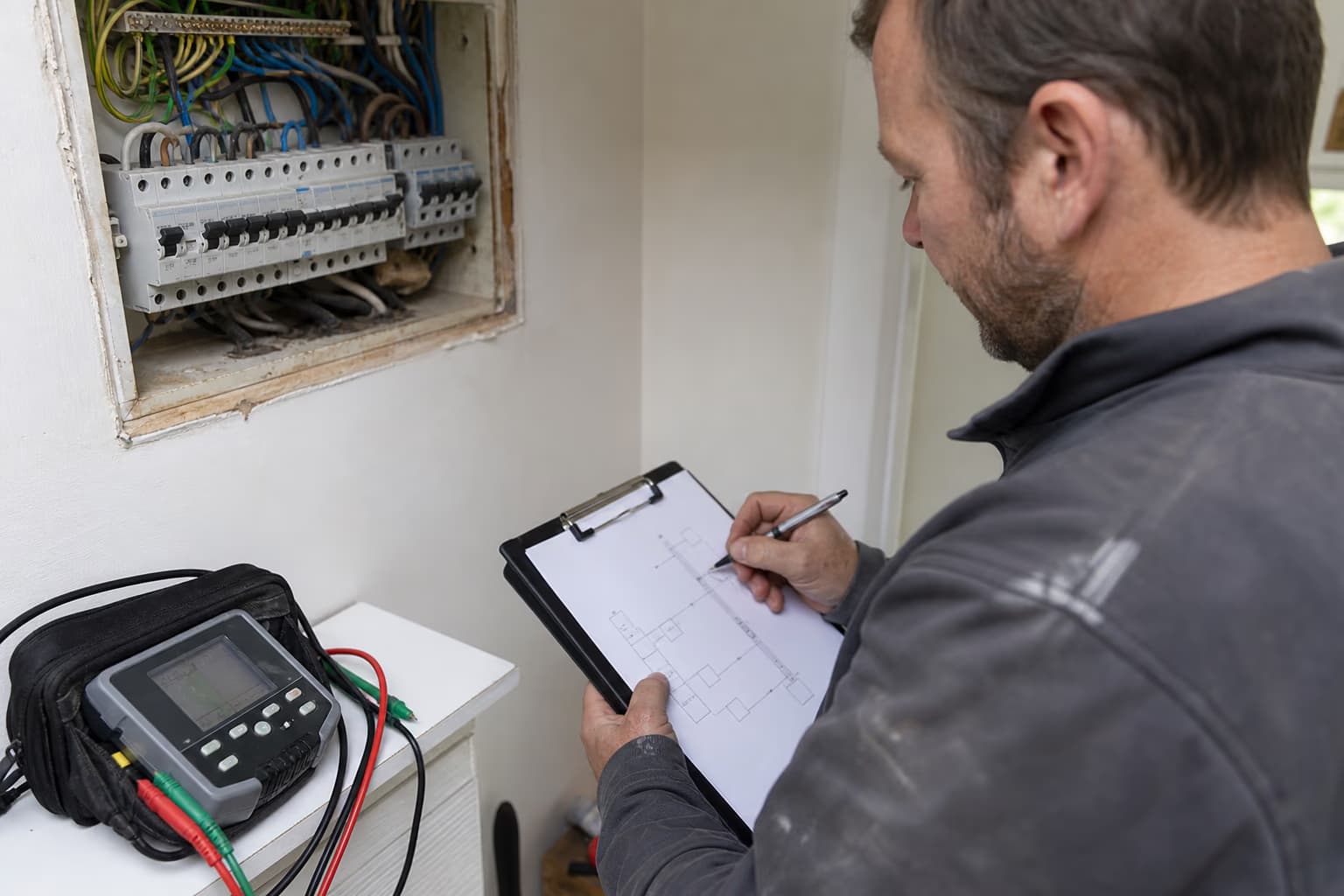
Testing and documenting completed work
Unrelated improvements should be listed separately from coded work. Completed remedial work needs appropriate verification and documentation. The practical value is in showing which answer can be agreed now and which remains conditional. Explaining likely disruption and any operational constraints should be scheduled at the point where it can genuinely influence scope, before finishes, equipment orders or programme promises make a different result costly.
Use this technical principle when assessing the property: an EICR reports on the condition of an existing installation at the time of inspection. The related practical factor is availability of previous certificates and circuit information. The programme should identify visual inspection of accessible installation components as a checkpoint and explain how a changed finding will be communicated. The final handover record, including completed Electrical Installation Condition Report, must describe the circuits and work actually covered.
- Unrelated improvements should be listed separately from coded work.
- Completed remedial work needs appropriate verification and documentation.
Evidence for testing and documenting completed work
Unrelated improvements should be listed separately from coded work. Completed remedial work needs appropriate verification and documentation. Assign the unanswered point to a person and stage so it cannot disappear between survey, quotation and installation.
Keep inspection and quotation independent
The original report should remain in the property record. A contractor should not promise classifications before inspecting. Together they define a hold point for EICR codes explained. Record the available property information, carry out reviewing available certificates and previous reports where relevant and name the person who can resolve the remaining question. This keeps a provisional allowance visibly provisional.
Apply this principle to the real installation: limitations must be recorded rather than hidden. Then review tenant or occupier access, because it may alter access, equipment or sequencing. Issuing the report and explaining priorities becomes the relevant delivery checkpoint, with separate certification for later remedial work where applicable retained where it applies to the completed work.
- The original report should remain in the property record.
- A contractor should not promise classifications before inspecting.
Frequently asked questions
What should I confirm first about EICR codes explained?
C1 indicates danger requiring immediate action. C2 identifies a potentially dangerous condition needing urgent remedy. Those two facts give the first conversation a defined starting point without treating an unvisited property as a standard package.
Which site evidence can change the answer for EICR codes explained?
The observation wording identifies the affected part and evidence. Further checks may be needed before a repair can be priced. Inspection or test evidence should override an assumption made from age, appearance, photographs or another property.
How should EICR codes explained appear in a quotation?
Unrelated improvements should be listed separately from coded work. Completed remedial work needs appropriate verification and documentation. The quotation should identify inclusions, exclusions and any provisional item whose final scope depends on opening, inspection or testing.
Which records matter after work connected with EICR codes explained?
The original report should remain in the property record. A contractor should not promise classifications before inspecting. Keep the applicable report, certificate, notification, schedules and change record with the property documents.
Sources and further reading
- Electrical Safety Standards in the Private Rented Sector (England) Regulations 2020
- Electrical Safety First guidance
- NICEIC consumer and contractor guidance
This guide provides general information and is ready for technical review before publication. Regulations and official guidance can change.