
vehicle, charger and parking-position discussion
Electrical service
EV charger installation in Dorset
Home EV charger installation planned around the vehicle, parking position, supply capacity, cable route, smart tariff and future household demand.

Plan first
Scope, site conditions and a clear handover stay connected throughout the work.
When this service is useful
Start with the problem, not a pre-selected package.
homeowners moving from occasional public charging to dependable home charging
properties that need a considered cable route or load-management plan
renovations and new homes preparing for present or future EV use
households coordinating EV charging with solar, battery or heat-pump plans
Before work begins
What the assessment needs to establish
Every property is different. These are the questions that make the scope accurate, help surface limits early and keep the work aligned with the finished result.supply capacity and existing installation checks
cable-route, equipment-position and connectivity review
assessment of earthing, protection and load-management needs
Useful before a survey Photos, drawings, previous certificates and a short description of the outcome can sharpen the first conversation. Where test results or access are needed, the scope stays provisional until they are available.
From plan to handover
How EV charging is typically delivered
The exact order changes around an occupied home, site access and other trades. What does not change is a clear sequence, safe working and a final check of the completed installation.- 01
survey and charger selection support
- 02
route and isolation planning
- 03
installation of supply, protection and charging equipment
- 04
inspection, testing and smart-feature setup
- 05
customer demonstration and certification

Plan for the finished property
The decisions that shape a better result
charger choice must suit the vehicle, property and desired controls
supply capacity and diversified household demand are assessed
equipment position considers impact, weather and cable reach
smart charging and load management are commissioned rather than assumed
Worth discussing early
off-street parking and equipment positionexternal cable routes and ground conditionsWi-Fi or data connectivitytariff, solar, battery and load-management integration
Useful records, not paperwork for its own sake
What you should leave with
installation certification
manufacturer setup and customer account information where relevant
Part P notification where applicable
test results and operating handover
Documentation is matched to the work actually completed. Any limitation, separate remedial work or future recommendation should be clear rather than folded into the final record.
Available across Dorset
Find EV charging near you
Clear answers
Questions about ev charger installation
How do you assess EV charging?
We start by understanding the property, the reason for the work and the information already available. The assessment then follows the relevant checks for EV charging, so the proposed scope is based on the installation rather than a generic package.
Will the work include testing and documentation?
Applicable electrical work is inspected and tested. The exact certificate, report, notification or handover information depends on the work completed, and this is explained before the project starts.
Can the work be coordinated with a renovation or other trades?
Yes. Early coordination is particularly useful where cable routes, finishes, kitchens, bathrooms, joinery, landscaping or other services affect the electrical sequence.
What information helps with an accurate quotation?
Share the property type, postcode, relevant drawings or photographs, the outcome you need, known electrical history and any programme constraints. A site visit may still be needed before the scope can be confirmed.
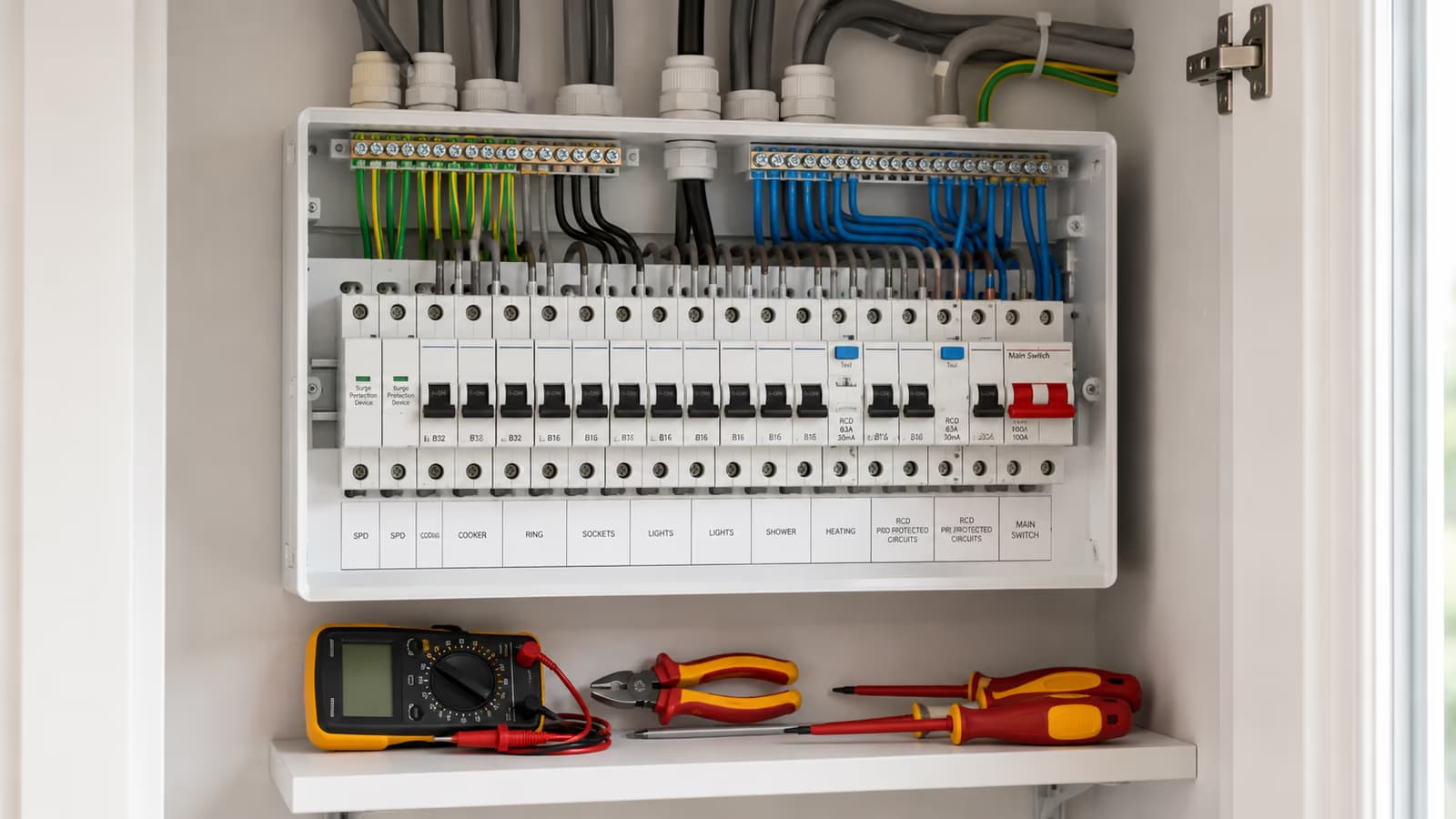 Planning detail
Go deeper if it is useful
Five practical notes for comparing a scopeWhen EV charging is worth assessing
Homeowners moving from occasional public charging to dependable home charging is treated as a specific part of the EV charging brief, not a phrase added after the quotation. We establish what can be confirmed from documents or visible conditions, what needs inspection or testing and which customer decision must be made before the work can be fixed. That distinction keeps the proposal useful when access, condition or another contractor changes the starting information.
Properties that need a considered cable route or load-management plan is considered alongside off-street parking and equipment position and Wi-Fi or data connectivity. The practical effect can be a different cable route, protective arrangement, equipment position, work sequence or handover requirement. Recording that effect gives the customer a reason for each material allowance and a way to review later changes without losing the original design intent.
EV charger installation should leave a customer able to identify the agreed result, the evidence used, the work completed and the records that apply. That means the visible finish and technical handover are planned together. If a limitation or optional future improvement remains, it is described separately so it cannot be mistaken for incomplete contracted work.
Tell us how the property is used now, what is changing and what a successful result looks like. That context helps us focus the assessment and avoid specifying equipment or work that does not solve the underlying need.
Assessment and design before work begins
Supply capacity and existing installation checks is treated as a specific part of the EV charging brief, not a phrase added after the quotation. We establish what can be confirmed from documents or visible conditions, what needs inspection or testing and which customer decision must be made before the work can be fixed. That distinction keeps the proposal useful when access, condition or another contractor changes the starting information.
Cable-route, equipment-position and connectivity review is considered alongside external cable routes and ground conditions and tariff, solar, battery and load-management integration. The practical effect can be a different cable route, protective arrangement, equipment position, work sequence or handover requirement. Recording that effect gives the customer a reason for each material allowance and a way to review later changes without losing the original design intent.
EV charger installation should leave a customer able to identify the agreed result, the evidence used, the work completed and the records that apply. That means the visible finish and technical handover are planned together. If a limitation or optional future improvement remains, it is described separately so it cannot be mistaken for incomplete contracted work.
Drawings, previous certificates, equipment details, photographs and a list of known problems all help. For renovation work, current architectural and interior information reduces late changes and protects the programme.
How EV charging is delivered
Installation of supply, protection and charging equipment is treated as a specific part of the EV charging brief, not a phrase added after the quotation. We establish what can be confirmed from documents or visible conditions, what needs inspection or testing and which customer decision must be made before the work can be fixed. That distinction keeps the proposal useful when access, condition or another contractor changes the starting information.
Inspection, testing and smart-feature setup is considered alongside Wi-Fi or data connectivity and off-street parking and equipment position. The practical effect can be a different cable route, protective arrangement, equipment position, work sequence or handover requirement. Recording that effect gives the customer a reason for each material allowance and a way to review later changes without losing the original design intent.
EV charger installation should leave a customer able to identify the agreed result, the evidence used, the work completed and the records that apply. That means the visible finish and technical handover are planned together. If a limitation or optional future improvement remains, it is described separately so it cannot be mistaken for incomplete contracted work.
Work areas, isolation requirements and interactions with other trades are agreed before they become urgent. Occupied homes need a different sequence from vacant renovations, and that difference is reflected in the programme.
Technical decisions that affect the scope
Smart charging and load management are commissioned rather than assumed is treated as a specific part of the EV charging brief, not a phrase added after the quotation. We establish what can be confirmed from documents or visible conditions, what needs inspection or testing and which customer decision must be made before the work can be fixed. That distinction keeps the proposal useful when access, condition or another contractor changes the starting information.
Charger choice must suit the vehicle, property and desired controls is considered alongside tariff, solar, battery and load-management integration and external cable routes and ground conditions. The practical effect can be a different cable route, protective arrangement, equipment position, work sequence or handover requirement. Recording that effect gives the customer a reason for each material allowance and a way to review later changes without losing the original design intent.
EV charger installation should leave a customer able to identify the agreed result, the evidence used, the work completed and the records that apply. That means the visible finish and technical handover are planned together. If a limitation or optional future improvement remains, it is described separately so it cannot be mistaken for incomplete contracted work.
The installation should support the way the property will be used after the work is complete. off-street parking and equipment position, external cable routes and ground conditions, Wi-Fi or data connectivity and tariff, solar, battery and load-management integration are discussed early enough to avoid avoidable rework.
Testing, documentation and a clear handover
To request a quotation, provide the property postcode, a concise description of the work, useful photographs or drawings and any timing constraints. We will confirm whether the next step is a call, document review or site assessment.
Installation certification is treated as a specific part of the EV charging brief, not a phrase added after the quotation. We establish what can be confirmed from documents or visible conditions, what needs inspection or testing and which customer decision must be made before the work can be fixed. That distinction keeps the proposal useful when access, condition or another contractor changes the starting information.
Manufacturer setup and customer account information where relevant is considered alongside off-street parking and equipment position and Wi-Fi or data connectivity. The practical effect can be a different cable route, protective arrangement, equipment position, work sequence or handover requirement. Recording that effect gives the customer a reason for each material allowance and a way to review later changes without losing the original design intent.
EV charger installation should leave a customer able to identify the agreed result, the evidence used, the work completed and the records that apply. That means the visible finish and technical handover are planned together. If a limitation or optional future improvement remains, it is described separately so it cannot be mistaken for incomplete contracted work.
Other electrical services
Still comparing the right route?
Discuss your property
Planning EV charging?
Tell us the property, the outcome and anything that affects access or timing. We’ll explain the most useful next step.Verified electrical customer reviews from Dorset clients
Real feedback from homeowners, landlords and local businesses across Bournemouth, Poole and Dorset.
“Excellent service! Brad carried out a wiring and fuse board upgrade and relocation to accommodate a heat pump. Efficient and professional. Fantastic workmanship, very neat and tidy finish. Would definitely recommend Toogood Electrical to anyone .”
Google MapsEdited 6 months ago
Tom
10 reviews · 7 photos
“Have used brad of toogood electrical many times over the years for personal electrics and for my landscaping business . Myself and all my clients have nothing but total satisfaction from brads attention to detail and quality of works .”
Google Maps6 months ago
Doug Hutchins
11 reviews
“Replaced ceramic hob and some light fittings. Great communication, showed up as arranged, really friendly, professional and completed job in really good time. Very impressed, will use again and highly recommend.”
Google MapsEdited 6 months ago
m w
Local Guide · 116 reviews · 45 photos
“We've always used Toogood Electrical for all our electrical work and they've always been first class. Very efficient, thorough and honest. I would recommend Brad to everyone.”
Google Maps6 months ago
James King
4 reviews
“Brad carried out full lighting on my garden abd some bid in the house. Great job. Highly recommend”
Google Maps2 months ago
Louis Ndzeshu
4 reviews
“Absolutely fantastic service - Brad was responsive and communicated clearly up until coming round to complete the work and it was done to an amazing standard. Quick efficient workers and considerate too - my father in law once joked that electricians are the worst trade for cleaning up after themselves but that was definitely not my experience!! Having just bought a house I’m sure I’ll need an electrician again and it will absolutely be Brad and his team :) highly recommend!”
Google Maps5 months ago
Sarah Penney
Local Guide · 24 reviews · 8 photos
“Brad did all our outside patio lighting recommended the type of lights we should use and fitted them at a time that suited us. His service and cost was fantastic and I would not hesitate to recommend him to my friends.”
Google Maps6 months ago
Chris Webb
2 reviews · 5 photos
“The service that Brad provided was as usual exemplary. There was an issue with the dimmer - much time was spent trying to fix without the desired effect so he went to plan B and is getting a new plate fitting. Excellent service with excellent skills of the trade.”
Google Maps6 months ago
Michael Bartlett
5 reviews
“Brad is so efficient and professional would definitely recommend. He never lets us down and always does such a great job and no job is too much trouble he will always find a way!”
Google Maps4 months ago
Lisa Platt
2 reviews
“We recently had a couple of jobs completed in our house by Brad and we’re really pleased with the results. From the start, communication was excellent. Before carrying out the work, he took the time to clearly explain what needed to be done and talked through the different options with us so we could choose the best outcome for it. The work was completed to a high standards. It was really reassuring to have someone who was so clear, professional, and easy to deal with throughout the process. Without doubt, I would happily recommend him to others and would definitely use his services again in the future.”
Google Maps4 months ago
Carlos LG
4 reviews
“Fantastic service from start to finish. Jack and Brad were punctual, professional, and clearly very knowledgeable. Everything was explained clearly and the work was carried out to a very high standard. They were tidy, efficient, and made sure everything was working perfectly before they left. I felt completely confident in the quality and safety of the work. Would highly recommend this company and will definitely use them again.”
Google Maps6 months ago
Natalia Labuda
5 reviews
“Very happy with Brad at Toogood Electrical. I contacted him on Checkatrade, and he came around when arranged and gave a very detailed quote. I arranged a date to have the work done but I had to change lastminute due to another company's failure to deliver the electrical item. Brad was very obilging and changed the date. He came did the job, was very professional, tidy and i would be very happy to use again in the future.”
Google Maps6 months ago
Anne Stephens
Local Guide · 15 reviews · 6 photos