
agreeing the purpose, extent and limitations of the inspection

Hengistbury Head electrical service
EICR electrical safety inspections in Hengistbury Head
Evidence-led inspection and testing with a clear report, practical explanation of observations and a separate scope for any remedial work.Planning in Hengistbury Head
Local detail should change the plan—not pad the page.
Coastal houses, bungalows and highly improved residential properties can call for different routes, equipment positions, protection or working sequence.Access and working around people
careful external routes, constrained sites and protection of landscaped areas.What can affect the scope
exposure, outdoor equipment and renovation-led electrical upgrades.Who may need the information
homeowners and property managers caring for coastal homes.A clear service brief
What helps us assess EICR properly
confirming access to the consumer unit, circuits and representative accessories
reviewing available certificates and previous reports
explaining likely disruption and any operational constraints
Before a visit Share the postcode, property type, photos or drawings, available records and the result you need. Mention any access, occupier or programme constraint early so the visit can be planned productively.

From assessment to handover
How the work is usually delivered
- 01
visual inspection of accessible installation components
- 02
electrical testing of circuits and protective measures
- 03
recording observations using the applicable classification system
- 04
issuing the report and explaining priorities
- 05
quoting separately for evidence-led remedial work if requested
After the work
Testing, records and next decisions
completed Electrical Installation Condition Report
recorded extent and limitations
schedule of inspections and test results
separate certification for later remedial work where applicable
Clear answers
Questions about EICR in Hengistbury Head
What changes the EICR scope in Hengistbury Head?
Coastal houses, bungalows and highly improved residential properties can change routes, access, equipment positions and the practical sequence. The proposal also accounts for exposure, outdoor equipment and renovation-led electrical upgrades, while the final technical scope follows inspection, design information and the actual installation.
What should I send before a Hengistbury Head survey?
Send the exact postcode, property type, photographs, relevant reports or drawings and the result you need. Mention careful external routes, constrained sites and protection of landscaped areas; that information helps allocate a productive visit without assuming the property matches another address in Hengistbury Head, Wick, Tuckton and Southbourne.
Can EICR be coordinated with residents or other trades?
Yes. Homeowners and property managers caring for coastal homes may need different access, decision and communication arrangements. Work zones, isolation, protection and the dates controlled by kitchens, joinery, landscaping or other contractors are recorded before they affect delivery.
Which records apply after EICR in Hengistbury Head?
Depending on the work, handover information can include completed Electrical Installation Condition Report, recorded extent and limitations, schedule of inspections and test results and separate certification for later remedial work where applicable. The record identifies what was completed and tested, and it keeps any limitation or optional future improvement separate from the contracted result.
Property-specific planning notes
Useful detail for a Hengistbury Head briefEICR electrical safety inspections for coastal houses, bungalows and highly improved residential properties
For a customer near Wick, the useful starting point is commercial and managed premises that need condition information. The brief then connects agreeing the purpose, extent and limitations of the inspection with exposure, outdoor equipment and renovation-led electrical upgrades, so the customer can see which facts are known and which still depend on the installation. It also records distribution-board identification because that detail may alter the route, equipment or programme. The address and survey evidence remain decisive even when a nearby property appears similar.
Maintainability is considered alongside installation. Around Wick, the plan asks how distribution-board identification will affect later access, then checks the technical position that classification codes require competent judgement and context. The handover expectation is described using recorded extent and limitations. This gives the completed work a practical operating context instead of treating testing and paperwork as an administrative afterthought.
The property briefing for Wick should distinguish the building from other addresses across Hengistbury Head, Wick and Tuckton. In this part of Hengistbury Head, the relevant pattern is coastal houses, bungalows and highly improved residential properties. Customers seeking EICR should identify the rooms, external areas or equipment involved and explain the finished result they expect. That gives commercial and managed premises that need condition information a property-specific context before inspection begins.
For a property near Hengistbury Head, describe the building form, occupancy, known electrical history and intended result before treating the service label as a scope. The recommendation still follows agreeing the purpose, extent and limitations of the inspection and evidence from the actual installation.
Survey evidence and access in Hengistbury Head
Two Hengistbury Head enquiries can share the same service label and still require different proposals. Near Hengistbury Head, the comparison should include landlords and letting agents managing inspection cycles, explaining likely disruption and any operational constraints, careful external routes, constrained sites and protection of landscaped areas and the planned point for quoting separately for evidence-led remedial work if requested. These details explain the difference more honestly than postcode or headline price alone, while completed Electrical Installation Condition Report shows what evidence may be retained after the work.
For homeowners and property managers caring for coastal homes, a useful record must survive beyond the initial conversation. Property information about coastal houses, bungalows and highly improved residential properties is linked to an EICR reports on the condition of an existing installation at the time of inspection, while the delivery record connects quoting separately for evidence-led remedial work if requested with completed Electrical Installation Condition Report. That chain helps an owner, agent or future electrician understand why the work was scoped in a particular way and which limitation would require a fresh assessment.
Access planning near Hengistbury Head is recorded separately from the electrical conclusion. The appointment notes careful external routes, constrained sites and protection of landscaped areas, who can authorise isolation and whether another person controls keys or resident communication. For EICR, that preparation supports explaining likely disruption and any operational constraints. If access differs on arrival, the record can show exactly which evidence remains outstanding instead of presenting a shortened visit as a complete survey.
Before a visit around Wick, confirm who can provide access, which areas or equipment can be isolated and whether residents or other trades need notice. Any inaccessible part remains a stated limitation rather than an assumed condition.
EICR delivery around Hengistbury Head
The delivery conversation in Hengistbury Head focuses on recording observations using the applicable classification system. Before that stage, the electrician checks the principle that limitations must be recorded rather than hidden and considers tenant or occupier access. Afterward, the handover may need to include separate certification for later remedial work where applicable. Treating these as connected stages gives the customer a clearer way to understand what has been assessed, installed and recorded.
Before a quotation is treated as complete, we bring the property and technical evidence together. In Hengistbury Head, the working context is coastal houses, bungalows and highly improved residential properties, while the visit also needs to account for careful external routes, constrained sites and protection of landscaped areas. The survey therefore includes reviewing available certificates and previous reports, and the delivery plan identifies when recording observations using the applicable classification system will happen. This creates a traceable route from the customer’s brief to the work sequence instead of hiding important assumptions inside a lump-sum description.
Delivery around Southbourne is coordinated with the way homeowners and property managers caring for coastal homes use or manage the property. The working programme identifies when recording observations using the applicable classification system will occur, what must stay available and which surfaces or routes need protection. This is particularly relevant across Wick, Tuckton and Southbourne, where the same service may need a different daily sequence even though the technical standard does not change.
During work around Tuckton, recording observations using the applicable classification system acts as a hold point. Current site information is checked before the next activity restricts access or makes a change more disruptive.
EICR design decisions for exposure, outdoor equipment and renovation-led electrical upgrades
Survey planning around Tuckton begins with confirming access to the consumer unit, circuits and representative accessories. Access is organised around careful external routes, constrained sites and protection of landscaped areas, and the intended sequence includes quoting separately for evidence-led remedial work if requested. Those three points are written together because a limitation in one can change the time or evidence available for the others. The proposal should make that dependency visible before a provisional allowance is mistaken for a fixed technical conclusion.
Before accepting the proposal, the customer should be able to identify four things: the evidence gathered through confirming access to the consumer unit, circuits and representative accessories; the access implications of careful external routes, constrained sites and protection of landscaped areas; the delivery stage represented by quoting separately for evidence-led remedial work if requested; and the expected record, schedule of inspections and test results. Those inclusions are checked against exposure, outdoor equipment and renovation-led electrical upgrades, making the local page a preparation tool rather than a promise of identical work at every address.
The design note for Tuckton links exposure, outdoor equipment and renovation-led electrical upgrades to the principle that a report outcome is never guaranteed before inspection. It also asks how sensitive equipment and planned isolation will affect operation or later maintenance. By recording that relationship for a real Hengistbury Head address, the proposal can explain why an equipment position, cable route, control strategy or protective arrangement was selected and what new evidence would justify changing it.
For enquiries near Southbourne, the proposal records why classification codes require competent judgement and context matters to the chosen route, protection or handover. That note gives the customer a clear basis for reviewing later changes.
Testing, records and a Hengistbury Head quotation
Change control matters when EICR is coordinated with other work. The original Hengistbury Head brief records exposure, outdoor equipment and renovation-led electrical upgrades, while the technical review includes the principle that classification codes require competent judgement and context. If a later decision affects distribution-board identification, the quotation can identify the resulting change to access, equipment, testing or recorded extent and limitations instead of carrying forward an obsolete assumption.
The Hengistbury Head quotation should state what is included at each decision point. It names how agreeing the purpose, extent and limitations of the inspection will be handled, what access is needed because of careful external routes, constrained sites and protection of landscaped areas, and where recording observations using the applicable classification system sits in the programme. It also explains the relevance of distribution-board identification. This makes the scope easier to compare and prevents an attractive equipment choice from obscuring the work needed to support it.
At handover, an enquiry from Wick should remain easy to distinguish from work at another address toward Southbourne. The property reference, completed scope, limitations and customer actions are kept with recorded extent and limitations. This matters for homeowners and property managers caring for coastal homes, who may need to pass records between owners, agents, residents or future contractors long after the original EICR conversation.
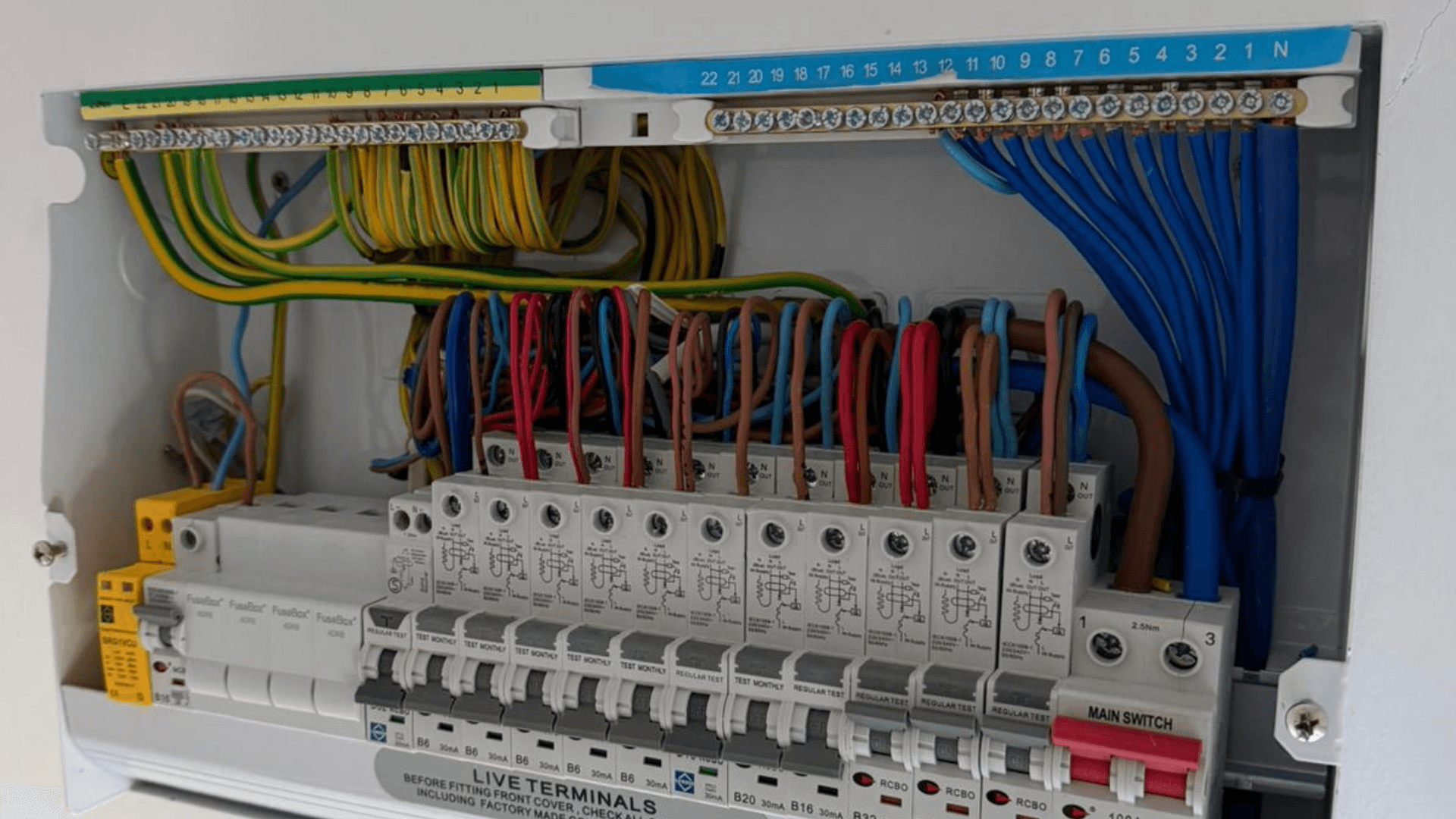 Scope before assumptions
Discuss the real property
Planning EICR in Hengistbury Head?Tell us the outcome you need, any useful evidence and the practical constraints. We’ll explain the most useful next step.Verified electrical customer reviews from Dorset clients
Real feedback from homeowners, landlords and local businesses across Bournemouth, Poole and Dorset.
“Excellent service! Brad carried out a wiring and fuse board upgrade and relocation to accommodate a heat pump. Efficient and professional. Fantastic workmanship, very neat and tidy finish. Would definitely recommend Toogood Electrical to anyone .”
Google MapsEdited 6 months ago
Tom
10 reviews · 7 photos
“Have used brad of toogood electrical many times over the years for personal electrics and for my landscaping business . Myself and all my clients have nothing but total satisfaction from brads attention to detail and quality of works .”
Google Maps6 months ago
Doug Hutchins
11 reviews
“Replaced ceramic hob and some light fittings. Great communication, showed up as arranged, really friendly, professional and completed job in really good time. Very impressed, will use again and highly recommend.”
Google MapsEdited 6 months ago
m w
Local Guide · 116 reviews · 45 photos
“We've always used Toogood Electrical for all our electrical work and they've always been first class. Very efficient, thorough and honest. I would recommend Brad to everyone.”
Google Maps6 months ago
James King
4 reviews
“Brad carried out full lighting on my garden abd some bid in the house. Great job. Highly recommend”
Google Maps2 months ago
Louis Ndzeshu
4 reviews
“Absolutely fantastic service - Brad was responsive and communicated clearly up until coming round to complete the work and it was done to an amazing standard. Quick efficient workers and considerate too - my father in law once joked that electricians are the worst trade for cleaning up after themselves but that was definitely not my experience!! Having just bought a house I’m sure I’ll need an electrician again and it will absolutely be Brad and his team :) highly recommend!”
Google Maps5 months ago
Sarah Penney
Local Guide · 24 reviews · 8 photos
“Brad did all our outside patio lighting recommended the type of lights we should use and fitted them at a time that suited us. His service and cost was fantastic and I would not hesitate to recommend him to my friends.”
Google Maps6 months ago
Chris Webb
2 reviews · 5 photos
“The service that Brad provided was as usual exemplary. There was an issue with the dimmer - much time was spent trying to fix without the desired effect so he went to plan B and is getting a new plate fitting. Excellent service with excellent skills of the trade.”
Google Maps6 months ago
Michael Bartlett
5 reviews
“Brad is so efficient and professional would definitely recommend. He never lets us down and always does such a great job and no job is too much trouble he will always find a way!”
Google Maps4 months ago
Lisa Platt
2 reviews
“We recently had a couple of jobs completed in our house by Brad and we’re really pleased with the results. From the start, communication was excellent. Before carrying out the work, he took the time to clearly explain what needed to be done and talked through the different options with us so we could choose the best outcome for it. The work was completed to a high standards. It was really reassuring to have someone who was so clear, professional, and easy to deal with throughout the process. Without doubt, I would happily recommend him to others and would definitely use his services again in the future.”
Google Maps4 months ago
Carlos LG
4 reviews
“Fantastic service from start to finish. Jack and Brad were punctual, professional, and clearly very knowledgeable. Everything was explained clearly and the work was carried out to a very high standard. They were tidy, efficient, and made sure everything was working perfectly before they left. I felt completely confident in the quality and safety of the work. Would highly recommend this company and will definitely use them again.”
Google Maps6 months ago
Natalia Labuda
5 reviews
“Very happy with Brad at Toogood Electrical. I contacted him on Checkatrade, and he came around when arranged and gave a very detailed quote. I arranged a date to have the work done but I had to change lastminute due to another company's failure to deliver the electrical item. Brad was very obilging and changed the date. He came did the job, was very professional, tidy and i would be very happy to use again in the future.”
Google Maps6 months ago
Anne Stephens
Local Guide · 15 reviews · 6 photos