
Holiday-Let Electrical Safety Scenario
An example of how EICR can be assessed and coordinated for a coastal holiday apartment in Weymouth.
Use it to understand the questions that may matter for your own project. The final plan always depends on the property, access and survey findings.
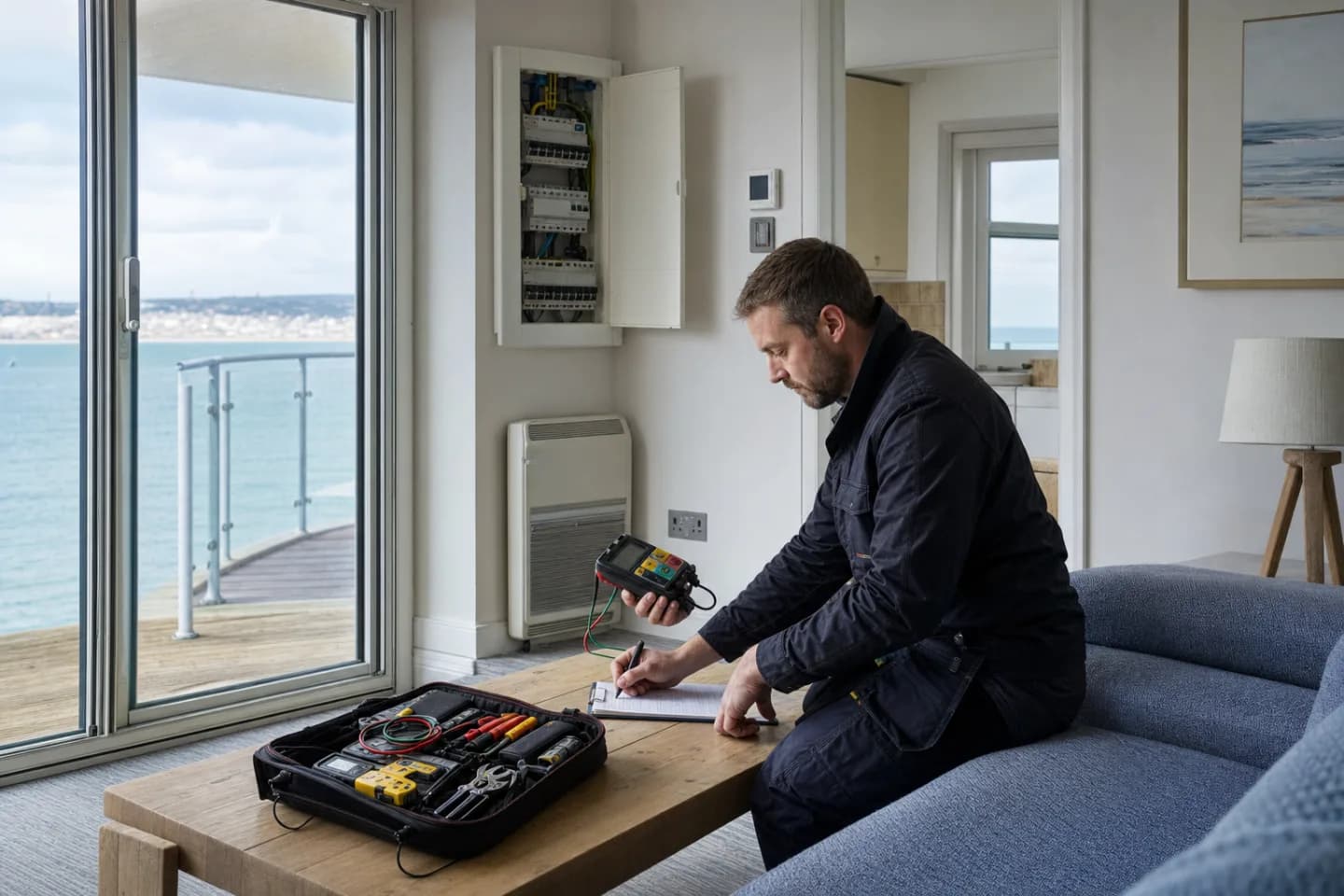
An example of the questions and choices that can shape this type of electrical work.
Coastal holiday apartment and management brief

Use a changeover window when representative accessories are reachable. The example treats it as a decision with a date and evidence source rather than an informal expectation on installation day. Electrical condition information organised around changeovers and guest safety. This remains an illustrative statement until a real customer brief, approved drawings and property evidence replace it. Seasonal access and coastal equipment exposure. The sequence identifies what could be prepared in advance and what still depends on opening, inspection or electrical test results. A documented inspection and maintenance planning process. The wording describes the planning objective and does not claim a measured or completed result at a customer address.
Explaining likely disruption and any operational constraints would provide one of the inputs. The record distinguishes observed condition, test evidence, client preference and provisional assumption. Visual inspection of accessible installation components is the delivery hold point for this section. A change after that stage could affect access, finishes, labour or commissioning. An EICR reports on the condition of an existing installation at the time of inspection is checked against coastal exposure, landlord records and older electrical systems. That local context informs the question without determining the technical answer in advance. Completed Electrical Installation Condition Report may form part of the handover, depending on the scope actually delivered. Labels, schedules and operating notes must match the final installation.
Shared buildings, seasonal occupancy and work planned around guests or tenants is included in the working plan for the coastal holiday apartment, with isolation and protection explained before work starts. The example deliberately avoids customer names, addresses, testimonials and performance claims. Its value is the traceable route from brief to evidence, decision, installation and handover. A comparable real project could follow a different route after survey. Toogood Electrical would update the scope and record the reason rather than forcing site evidence to fit this scenario. Confirm the letting model and responsible managing contact. In this scenario, that requirement is written into the project brief with the person responsible for supplying information or access.
- Confirm the letting model and responsible managing contact.
- Use a changeover window when representative accessories are reachable.
What to consider: coastal holiday apartment and management brief
Confirm the letting model and responsible managing contact. Use a changeover window when representative accessories are reachable. Your own property may need a different approach after a survey.
Inspection access between guest stays
Electrical condition information organised around changeovers and guest safety. This remains an illustrative statement until a real customer brief, approved drawings and property evidence replace it. Seasonal access and coastal equipment exposure. The sequence identifies what could be prepared in advance and what still depends on opening, inspection or electrical test results. A documented inspection and maintenance planning process. The wording describes the planning objective and does not claim a measured or completed result at a customer address. Reviewing available certificates and previous reports would provide one of the inputs. The record distinguishes observed condition, test evidence, client preference and provisional assumption.
Issuing the report and explaining priorities is the delivery hold point for this section. A change after that stage could affect access, finishes, labour or commissioning. Limitations must be recorded rather than hidden is checked against coastal exposure, landlord records and older electrical systems. That local context informs the question without determining the technical answer in advance. Separate certification for later remedial work where applicable may form part of the handover, depending on the scope actually delivered. Labels, schedules and operating notes must match the final installation. Shared buildings, seasonal occupancy and work planned around guests or tenants is included in the working plan for the coastal holiday apartment, with isolation and protection explained before work starts.
The example deliberately avoids customer names, addresses, testimonials and performance claims. Its value is the traceable route from brief to evidence, decision, installation and handover. A comparable real project could follow a different route after survey. Toogood Electrical would update the scope and record the reason rather than forcing site evidence to fit this scenario. Record limitations rather than rushing inaccessible areas. In this scenario, that requirement is written into the project brief with the person responsible for supplying information or access. Identify heating controls and equipment frequently used by guests. The example treats it as a decision with a date and evidence source rather than an informal expectation on installation day.
- Record limitations rather than rushing inaccessible areas.
- Identify heating controls and equipment frequently used by guests.
What to consider: inspection access between guest stays
Record limitations rather than rushing inaccessible areas. Identify heating controls and equipment frequently used by guests. Your own property may need a different approach after a survey.
High-use and exterior electrical context

Seasonal access and coastal equipment exposure. The sequence identifies what could be prepared in advance and what still depends on opening, inspection or electrical test results. A documented inspection and maintenance planning process. The wording describes the planning objective and does not claim a measured or completed result at a customer address. Confirming access to the consumer unit, circuits and representative accessories would provide one of the inputs. The record distinguishes observed condition, test evidence, client preference and provisional assumption. Visual inspection of accessible installation components is the delivery hold point for this section. A change after that stage could affect access, finishes, labour or commissioning.
A report outcome is never guaranteed before inspection is checked against coastal exposure, landlord records and older electrical systems. That local context informs the question without determining the technical answer in advance. Schedule of inspections and test results may form part of the handover, depending on the scope actually delivered. Labels, schedules and operating notes must match the final installation. Shared buildings, seasonal occupancy and work planned around guests or tenants is included in the working plan for the coastal holiday apartment, with isolation and protection explained before work starts. The example deliberately avoids customer names, addresses, testimonials and performance claims. Its value is the traceable route from brief to evidence, decision, installation and handover.
A comparable real project could follow a different route after survey. Toogood Electrical would update the scope and record the reason rather than forcing site evidence to fit this scenario. Include balcony or exterior electrical items within the agreed scope. In this scenario, that requirement is written into the project brief with the person responsible for supplying information or access. Consider salt exposure in the maintenance plan. The example treats it as a decision with a date and evidence source rather than an informal expectation on installation day. Electrical condition information organised around changeovers and guest safety. This remains an illustrative statement until a real customer brief, approved drawings and property evidence replace it.
- Include balcony or exterior electrical items within the agreed scope.
- Consider salt exposure in the maintenance plan.
What to consider: high-use and exterior electrical context
Include balcony or exterior electrical items within the agreed scope. Consider salt exposure in the maintenance plan. Your own property may need a different approach after a survey.
Maintenance actions and owner communication
Give guests a simple fault-reporting route. In this scenario, that requirement is written into the project brief with the person responsible for supplying information or access. Keep technical instructions with the manager rather than guests. The example treats it as a decision with a date and evidence source rather than an informal expectation on installation day. Electrical condition information organised around changeovers and guest safety. This remains an illustrative statement until a real customer brief, approved drawings and property evidence replace it. Seasonal access and coastal equipment exposure. The sequence identifies what could be prepared in advance and what still depends on opening, inspection or electrical test results.
A documented inspection and maintenance planning process. The wording describes the planning objective and does not claim a measured or completed result at a customer address. Agreeing the purpose, extent and limitations of the inspection would provide one of the inputs. The record distinguishes observed condition, test evidence, client preference and provisional assumption. Issuing the report and explaining priorities is the delivery hold point for this section. A change after that stage could affect access, finishes, labour or commissioning. Classification codes require competent judgement and context is checked against coastal exposure, landlord records and older electrical systems. That local context informs the question without determining the technical answer in advance.
Recorded extent and limitations may form part of the handover, depending on the scope actually delivered. Labels, schedules and operating notes must match the final installation. Shared buildings, seasonal occupancy and work planned around guests or tenants is included in the working plan for the coastal holiday apartment, with isolation and protection explained before work starts. The example deliberately avoids customer names, addresses, testimonials and performance claims. Its value is the traceable route from brief to evidence, decision, installation and handover. A comparable real project could follow a different route after survey. Toogood Electrical would update the scope and record the reason rather than forcing site evidence to fit this scenario.
- Give guests a simple fault-reporting route.
- Keep technical instructions with the manager rather than guests.
What to consider: maintenance actions and owner communication
Give guests a simple fault-reporting route. Keep technical instructions with the manager rather than guests. Your own property may need a different approach after a survey.
Illustrative holiday-let record
Review records after refurbishment or equipment replacement. The example treats it as a decision with a date and evidence source rather than an informal expectation on installation day. Electrical condition information organised around changeovers and guest safety. This remains an illustrative statement until a real customer brief, approved drawings and property evidence replace it. Seasonal access and coastal equipment exposure. The sequence identifies what could be prepared in advance and what still depends on opening, inspection or electrical test results. A documented inspection and maintenance planning process. The wording describes the planning objective and does not claim a measured or completed result at a customer address.
Explaining likely disruption and any operational constraints would provide one of the inputs. The record distinguishes observed condition, test evidence, client preference and provisional assumption. Visual inspection of accessible installation components is the delivery hold point for this section. A change after that stage could affect access, finishes, labour or commissioning. An EICR reports on the condition of an existing installation at the time of inspection is checked against coastal exposure, landlord records and older electrical systems. That local context informs the question without determining the technical answer in advance. Completed Electrical Installation Condition Report may form part of the handover, depending on the scope actually delivered. Labels, schedules and operating notes must match the final installation.
Shared buildings, seasonal occupancy and work planned around guests or tenants is included in the working plan for the coastal holiday apartment, with isolation and protection explained before work starts. The example deliberately avoids customer names, addresses, testimonials and performance claims. Its value is the traceable route from brief to evidence, decision, installation and handover. A comparable real project could follow a different route after survey. Toogood Electrical would update the scope and record the reason rather than forcing site evidence to fit this scenario. Track completed work after the condition report. In this scenario, that requirement is written into the project brief with the person responsible for supplying information or access.
- Track completed work after the condition report.
- Review records after refurbishment or equipment replacement.
Helpful information sources
- Electrical Safety Standards in the Private Rented Sector (England) Regulations 2020
- Electrical Safety First guidance
- NICEIC consumer and contractor guidance
Last checked 2026-07-31.
Clear answers
Questions about EICR project weymouth
What can I learn from this example?
It shows the kinds of decisions that can affect a similar project, including access, equipment, testing and handover.
Will a real project follow the same sequence?
Not necessarily. The sequence depends on the actual property, inspection findings, design information, access, equipment and wider building programme.
Can this example be used as a quotation?
No. A quotation needs property-specific information and may require a site assessment or testing.
Can I discuss a similar project?
Yes. Share the property details and the result you want to achieve, and we can advise on the most useful next step.
Planning a comparable electrical project?
Share the real property details, outcome and constraints. We will explain the information needed to assess it properly.