
On this page
Short answer
What matters most
New circuits and alterations need documentation matched to the work—often an Electrical Installation Certificate for new circuits and, where appropriate, a Minor Electrical Installation Works Certificate for qualifying minor work. This guide explains what the decision depends on without treating age, appearance or a headline price as property evidence. Record the condition, access, intended result and available documents, then ask which points still require inspection, design or testing before accepting a recommendation.
Match the certificate to the work
The certificate should identify the actual installation scope. A new circuit normally needs fuller design and test information. Read those points together before drawing a conclusion about electrical certificate for new circuit. Agreement on first-fix information and decision deadlines separates what can be seen or supplied in advance from the facts that require access or test evidence. Any unresolved condition belongs in the limitations, not inside a confident-sounding fixed assumption.
A competent proposal links design, delivery and evidence. The design question is how this principle applies: load assessment includes high-demand and future equipment. The delivery question concerns testing, certification, schedules and homeowner handover, while the handover question is which evidence, including design and circuit information appropriate to the project, is required. Network, security and smart-control infrastructure can affect all three, so it should not be left to an informal site conversation.
For new circuits and alterations: what certification should you receive, the decision record should name the evidence, owner and deadline. That is especially important when “the certificate should identify the actual installation scope” may alter the plan or when “a new circuit normally needs fuller design and test information” remains dependent on another trade or site visit.
- The certificate should identify the actual installation scope.
- A new circuit normally needs fuller design and test information.
Evidence for match the certificate to the work
The certificate should identify the actual installation scope. A new circuit normally needs fuller design and test information. Note whether each fact came from observation, a current document, electrical testing or an assumption that still needs confirmation.

New circuits compared with minor alterations
Minor work certification has defined limits. Existing-installation defects should be recorded appropriately. They form a useful evidence boundary for this decision. Begin with coordination with kitchens, bathrooms, joinery and mechanical services, then mark which conclusion is observed, measured, documented or still provisional. That sequence makes the later quotation easier to challenge and compare if site information changes.
The recommendation also needs to work after installation day. Test the property against this principle: circuit routes consider fire stopping, insulation and other services. Then account for architectural and interior-design coordination and decide how first-fix containment, boxes and cabling will be witnessed or recorded. Handover information such as operating information and final schedules should match the final arrangement rather than the original estimate.
Translate the advice into property-specific questions: what does “minor work certification has defined limits” change here, and what evidence will confirm “existing-installation defects should be recorded appropriately”? The written answer should identify the effect on scope, not merely repeat the preferred outcome.
- Minor work certification has defined limits.
- Existing-installation defects should be recorded appropriately.
Evidence for new circuits compared with minor alterations
Minor work certification has defined limits. Existing-installation defects should be recorded appropriately. Record the access available on the day and explain how any limitation narrows the conclusion that can safely be drawn.
Inspection, testing and schedules
Circuit schedules and test results need consistent references. Notifiable work has a separate building-regulation process. For this part of the brief, distinguish the customer's known requirement from the installation evidence. Assessment of supply, demand and future loads provides one route to that evidence. If access prevents confirmation, record the missing fact and the consequence instead of silently treating it as satisfactory.
This section changes the work only when the evidence justifies it. Start with the technical principle: bathrooms and exterior work require additional environmental planning. Then assess the practical effect of programme dependencies between trades; neither should be inferred from the headline query. The sequence includes testing, certification, schedules and homeowner handover, and the completed record may include Part P notification for notifiable domestic work according to the work delivered.
The useful decision is not simply whether the work can be done. Show how “circuit schedules and test results need consistent references” affects access, equipment, programme or price, and how “notifiable work has a separate building-regulation process” will be verified. That creates a fair comparison point before a late finding becomes an unexplained change.
- Circuit schedules and test results need consistent references.
- Notifiable work has a separate building-regulation process.
Evidence for inspection, testing and schedules
Circuit schedules and test results need consistent references. Notifiable work has a separate building-regulation process. Keep the original evidence with the decision so a future owner or electrician can understand why the scope took this form.
Part P notification and records
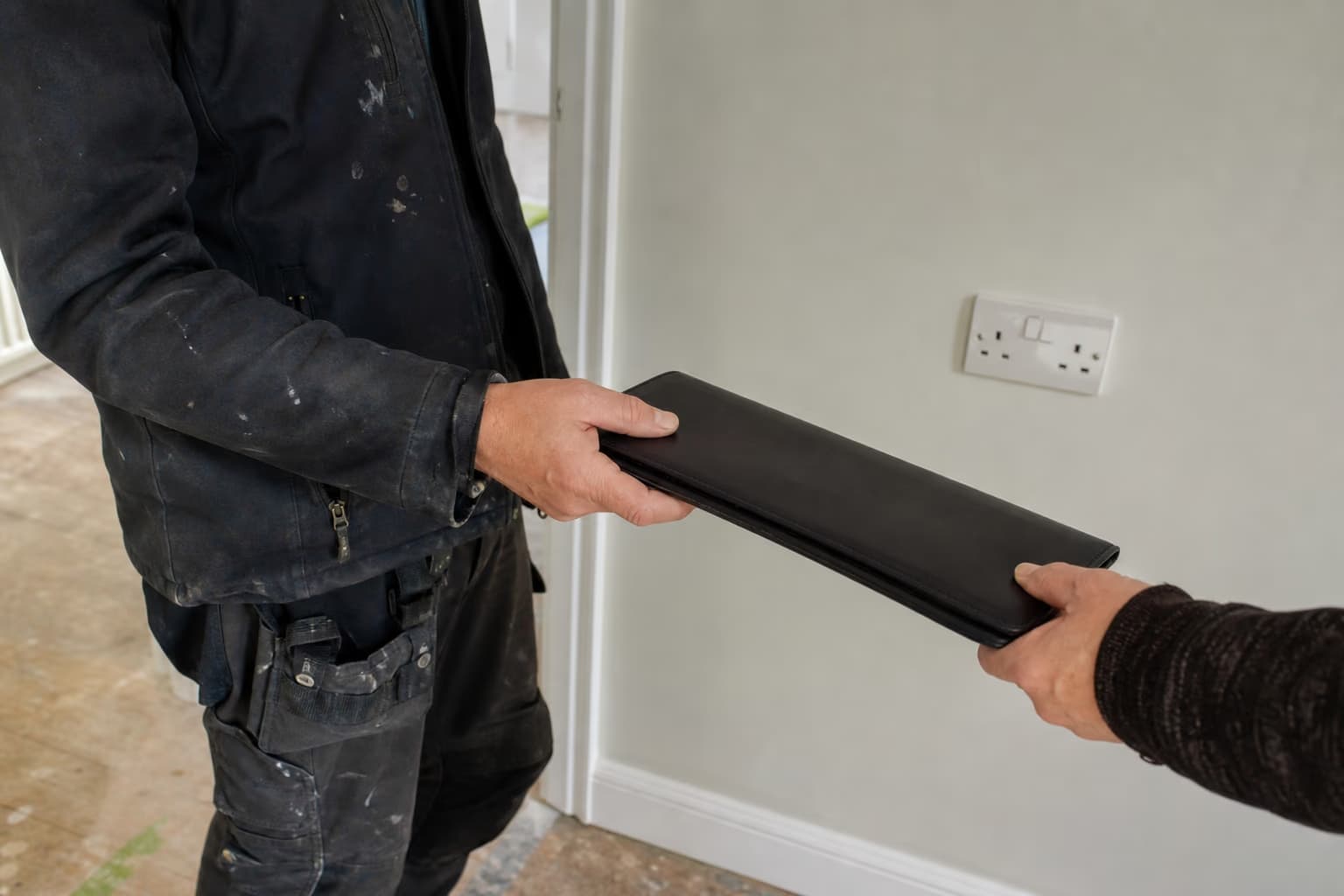
Notification evidence is not the same as the electrical certificate. Manufacturer paperwork does not replace installation certification. These are connected questions rather than separate checklist items. Use review of drawings, room use and equipment schedules to establish the starting condition and note the source of each answer. A photograph or previous document can guide the visit, but it should not be presented as a current electrical test result.
Turn the answer into an auditable scope by recording the technical principle clearly: documentation is built into the project rather than added at the end. Then address the practical factor of EV, heat-pump, solar and battery readiness. State when first-fix containment, boxes and cabling occurs, what must be available at that point and who approves a variation. Where applicable, electrical installation certificates then closes the chain from initial question to tested result.
Before approving this part of the scope, ask what would change if the finding behind “notification evidence is not the same as the electrical certificate” were different on site. The proposal should also state how “manufacturer paperwork does not replace installation certification” is evidenced, who responds and whether cost or programme needs fresh agreement.
- Notification evidence is not the same as the electrical certificate.
- Manufacturer paperwork does not replace installation certification.
Evidence for part p notification and records
Notification evidence is not the same as the electrical certificate. Manufacturer paperwork does not replace installation certification. Note whether each fact came from observation, a current document, electrical testing or an assumption that still needs confirmation.
Questions to ask before final payment
Customers should retain documents with the property. Missing information should be resolved before the work is closed. The practical value is in showing which answer can be agreed now and which remains conditional. Agreement on first-fix information and decision deadlines should be scheduled at the point where it can genuinely influence scope, before finishes, equipment orders or programme promises make a different result costly.
Use this technical principle when assessing the property: load assessment includes high-demand and future equipment. The related practical factor is network, security and smart-control infrastructure. The programme should identify second-fix equipment and accessories as a checkpoint and explain how a changed finding will be communicated. The final handover record, including design and circuit information appropriate to the project, must describe the circuits and work actually covered.
A decision-ready brief connects the two issues to consequences. It records the implication of “customers should retain documents with the property”, the verification method for “missing information should be resolved before the work is closed” and the stage after which a change would cause rework.
- Customers should retain documents with the property.
- Missing information should be resolved before the work is closed.
Frequently asked questions
What should I confirm first about electrical certificate for new circuit?
The certificate should identify the actual installation scope. A new circuit normally needs fuller design and test information. Those two facts give the first conversation a defined starting point without treating an unvisited property as a standard package.
Which site evidence can change the answer for electrical certificate for new circuit?
Circuit schedules and test results need consistent references. Notifiable work has a separate building-regulation process. Inspection or test evidence should override an assumption made from age, appearance, photographs or another property.
How should electrical certificate for new circuit appear in a quotation?
Notification evidence is not the same as the electrical certificate. Manufacturer paperwork does not replace installation certification. The quotation should identify inclusions, exclusions and any provisional item whose final scope depends on opening, inspection or testing.
Which records matter after work connected with electrical certificate for new circuit?
Customers should retain documents with the property. Missing information should be resolved before the work is closed. Keep the applicable report, certificate, notification, schedules and change record with the property documents.
Sources and further reading
- Approved Document P: electrical safety in dwellings
- Electrical Safety First guidance
- NICEIC consumer and contractor guidance
This guide provides general information and is ready for technical review before publication. Regulations and official guidance can change.